Unlocking the Shield: Saudi Arabia Continues to Forge Global Partnerships in Critical Minerals
Long before Saudi Arabia emerged as an energy powerhouse, geological forces beneath the Earth’s surface were quietly enriching deposits of significant value.
Spanning Saudi Arabia’s western coast, the Arabian Shield is among the world’s oldest geological formations. Estimated to have formed between 500 and 900 million years ago through a series of volcanic, tectonic, and continental collisions, this craton preserves a remarkable record of the region’s evolution and hosts a rich concentration of critical minerals.
Today, the ancient landscape is home to some of the world’s most in-demand natural resources, further positioning the Kingdom as a rare-earth pioneer.
Since the launch of Vision 2030, the importance of critical minerals has become a strategic priority, with the mining sector, led by Minister of Industry and Mineral Resources Bandar Alkhorayef, recognized as the third pillar of the Kingdom’s national economy. As Saudi Arabia accelerates efforts to expand renewable energy, advanced manufacturing, and digital infrastructure, critical minerals are becoming central to the nation’s industrial development and global competitiveness.
Although small in volume, rare earth elements—a group of 17 metallic elements—are indispensable components of Saudi Arabia’s $2.5 trillion mineral endowment and of modern technologies such as electric vehicles, wind turbine, aircraft systems, and data centers.
Therefore, as demand for advanced technology continues to rise, securing a consistent supply of critical minerals has become a global imperative for countries transitioning to clean energy and AI deployment. International attention is shifting beyond access to resources alone toward the development of a resilient, integrated value chain encompassing mining, processing, refining, and advanced manufacturing.
As a result, the Kingdom is uniquely positioned to benefit from this transformation, with substantial mineral discoveries reinforcing Saudi Arabia’s emergence as a premier hub for mining investments and multilateral cooperation.
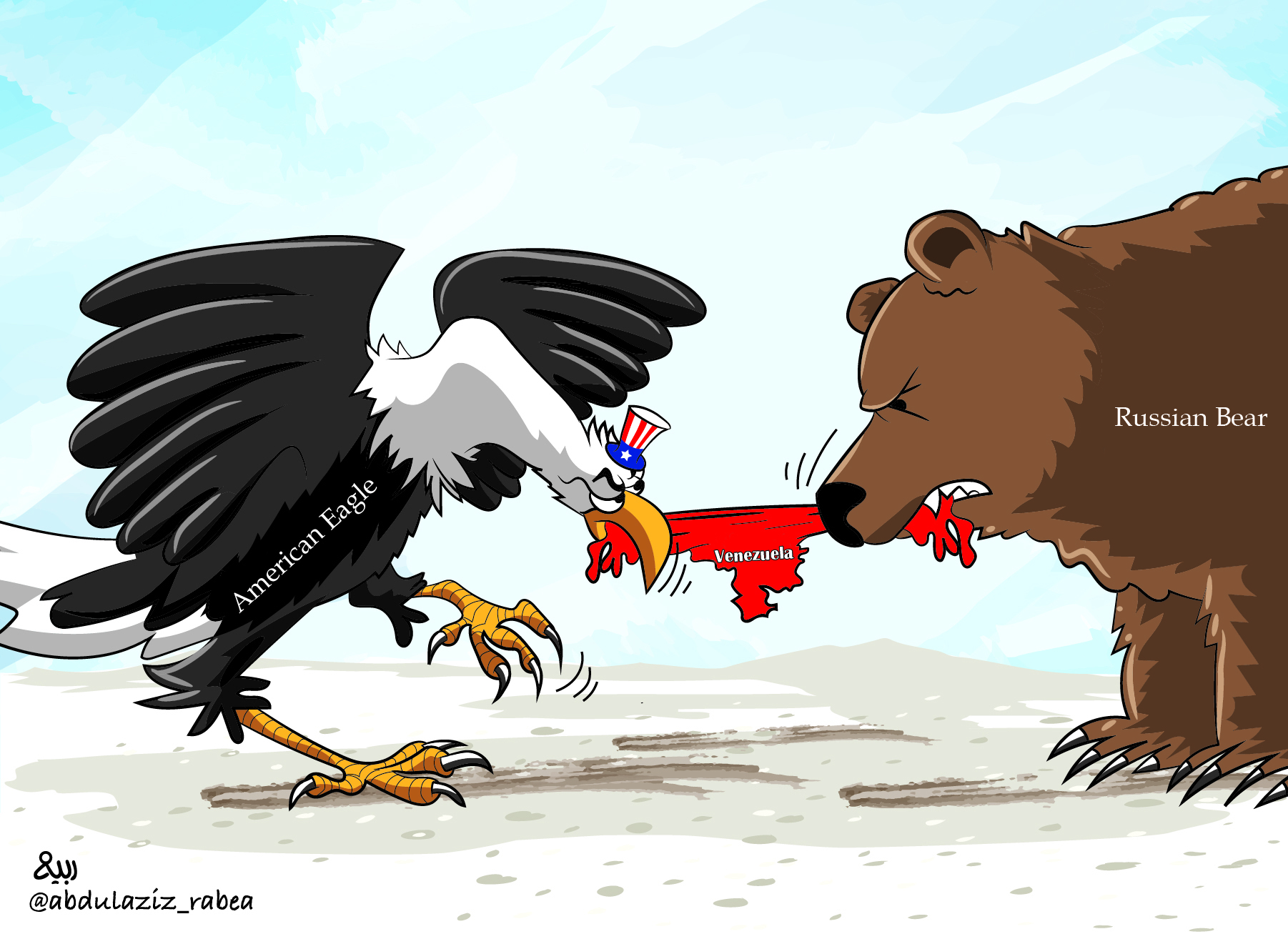
This week, Alkhorayef concluded a high-level diplomatic visit to the Russian Federation, a country renowned for its vast reserves of critical minerals, including nickel, cobalt, platinum group metals, and rare earth elements.
For a century, Saudi Arabia and Russia have maintained warm bilateral relations, and His Excellency's attendance at the St. Petersburg International Economic Forum (SPIEF) this week follows a memorandum of understanding (MoU) signed between the two countries on the sidelines of the 2024 Future Minerals Forum in Riyadh.
The agreement aims to deepen collaboration across the critical-minerals value chain, while underscoring their shared commitment to joint exploration, technology exchange, and investment in mineral processing and advanced manufacturing.
Saudi Arabia’s visits to Russia over the past few years subsequently reaffirm the Kingdom’s intent to build enduring international partnerships. The country’s efforts to engage in high-level dialogue also highlight Saudi Arabia’s resolve to secure its own supply chains while equally contributing to the stability and growth of global markets.
In November 2025, the industry minister announced the value of rare earth element discoveries had reached $100 billion - an increase of 90% since 2018. He also revealed that studies conducted by the Saudi Geological Survey identified two advanced-stage exploration areas containing an estimated 644 million tons of resources, with an average grade of 0.3% total rare earth oxides.
Four additional locations have also been targeted for further evaluation, increasing the estimated resource from 364 million to 714 million tons, with concentrations up to 1.66%.
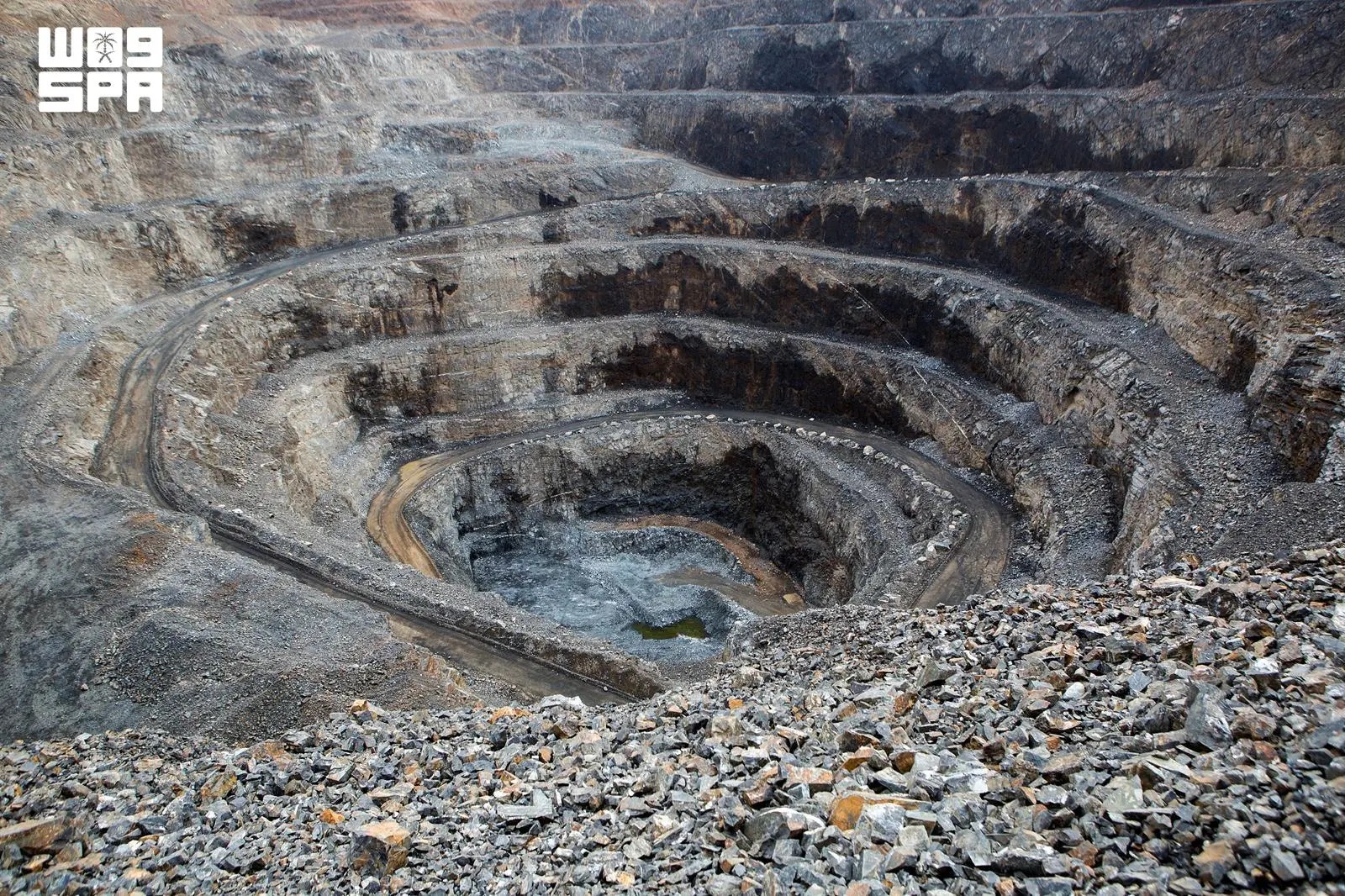
One of the most significant discoveries lies beneath the Jabal Sayyid and Jabal Quraiyah geological sites. Considered two of the world’s most auspicious mining prospects, the underground mines are located within a highly lucrative mineral belt valued at approximately $51.3 billion.
However, the Kingdom’s ambitions extend far beyond extraction. Recognizing that the greatest economic value is often generated further along the supply chain, the country is actively pursuing a blueprint to develop an integrated critical minerals ecosystem. The roadmap aims to expand Saudi Arabia’s capabilities in mining, separation, refining, and advanced manufacturing, enhancing economic value within the Kingdom while supporting global supply chain resilience.
Underpinning this strategy is a growing network of international partnerships and cooperation agreements aimed at advancing critical minerals value chains, attracting investment, facilitating technology transfer, and supporting the development of processing and manufacturing capabilities. These efforts are complemented by ongoing discussions with global industry leaders to establish processing and separation facilities that leverage both domestic and international feedstock.
By transforming the country’s mineral wealth into a catalyst for economic leadership, technological innovation, and supply chain security, Saudi Arabia is positioning itself as a key player in the global energy transition. Much like the vast Arabian Shield, these ambitions are rooted in ancient foundations that now drive a bold, forward-looking vision.
Saudi Arabia is not just shaping its own future — it is helping build the resilient supply chains needed to support global growth and development for decades to come.