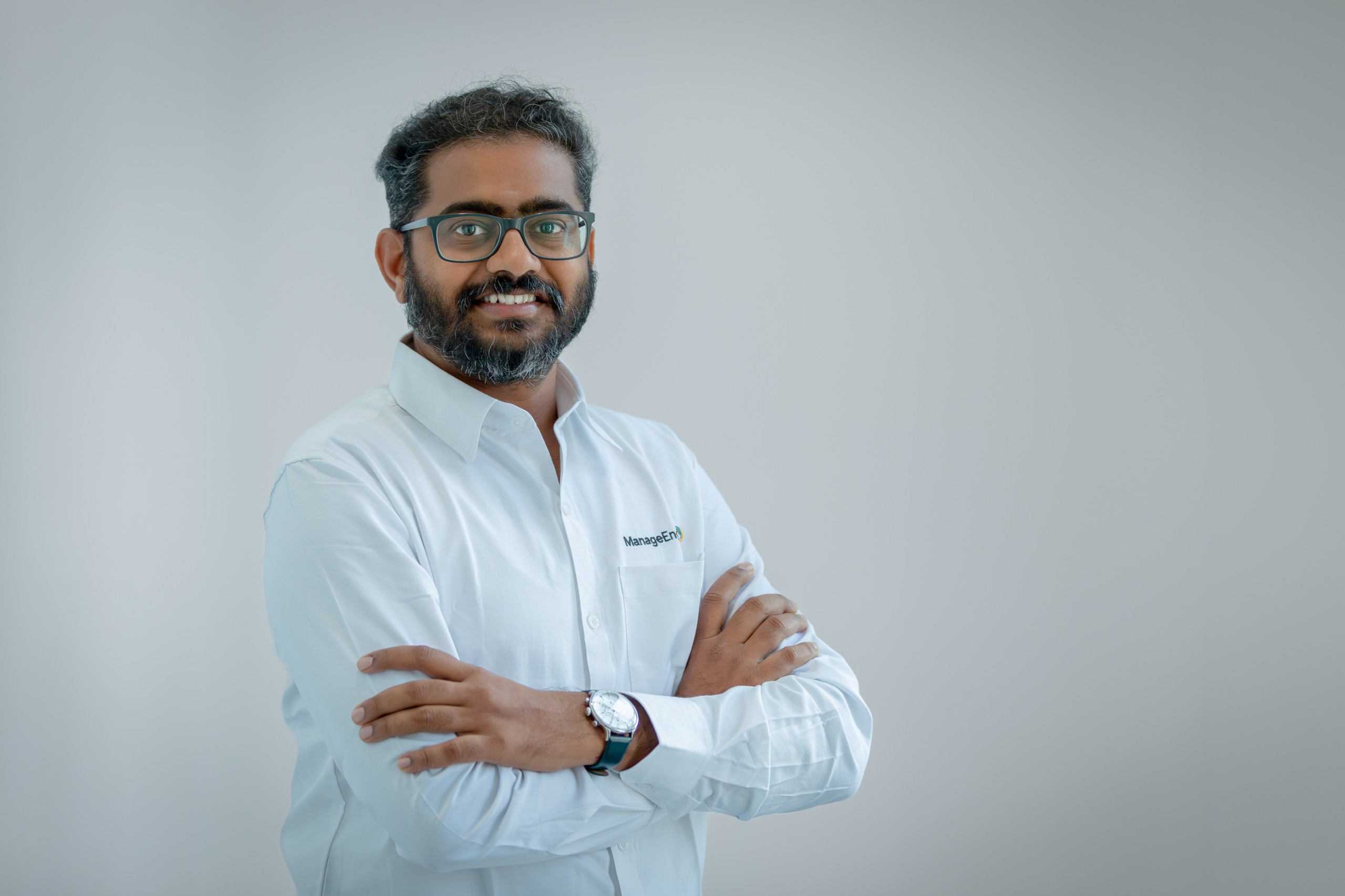
 Prasanna Venkatesh Srinivasan, Associate Director at ManageEngine
Saudi Arabia Has the Potential to Become a Regional Benchmark for Responsible Enterprise AI Adoption
As Saudi Arabia continues to accelerate its digital transformation journey under Vision 2030, artificial intelligence is rapidly emerging as a key driver of innovation, operational efficiency, and economic growth. Organizations across the Kingdom are increasingly exploring advanced AI-powered technologies to strengthen cybersecurity, enhance resilience, and optimize business operations while maintaining strong governance and regulatory compliance.
Against this backdrop, ManageEngine recently unveiled a new generation of autonomous AI agents designed to move beyond traditional AI assistance and enable intelligent, outcome-driven automation across enterprise IT environments. The company believes these capabilities will play a pivotal role in helping organizations manage growing technological complexity while supporting their long-term digital transformation goals.
In this interview with Riyadh Daily, Prasanna Venkatesh Srinivasan, Associate Director at ManageEngine, discusses the evolution of enterprise AI, the significance of autonomous AI agents, the role of human oversight in AI-driven environments, and the opportunities ahead for Saudi Arabia as it strengthens its position as a regional leader in digital innovation, cybersecurity, and AI-powered enterprise transformation.
The following is the full interview:
1- Saudi Arabia is rapidly advancing its Vision 2030 digital transformation agenda. How do you see ManageEngine contributing to the Kingdom’s ambitions around AI, smart infrastructure, and digital resilience?
- Saudi Arabia is not simply adopting digital technologies; it is actively shaping what the future of digital economies can look like. The Kingdom's Vision 2030 agenda has created significant momentum around AI, smart infrastructure, and large-scale digital transformation, and that progress requires secure, intelligent, and resilient technology foundations.
At ManageEngine, we see our role as helping organizations navigate this transformation by providing the visibility, automation, governance, and cybersecurity capabilities needed to manage increasingly complex IT environments. As enterprises expand their use of AI, cloud services, and connected infrastructure, operational resilience becomes just as important as innovation itself. Beyond technology, we also invest in partner enablement, training, and ecosystem development to help strengthen local digital capabilities. We believe trusted AI, resilient infrastructure, and strong governance will be the foundations that enable the Kingdom to achieve its Vision 2030 objectives.
2- ManageEngine recently introduced autonomous AI agents across its IT management portfolio. What makes this evolution significant for enterprises in the Middle East, particularly in Saudi Arabia?
- The introduction of autonomous AI agents represents an important shift in how enterprises approach AI adoption. Until now, AI has largely been used to provide recommendations or assist users with decision-making. Autonomous agents take this a step further by executing tasks and driving outcomes within defined governance frameworks. For organizations in Saudi Arabia, where digital transformation initiatives are accelerating under Vision 2030, this capability can help scale operations without proportionally increasing complexity. As businesses modernize infrastructure and digital services, AI agents can improve operational efficiency, strengthen resilience, and help organizations respond faster to changing business and security requirements.
3- How do you expect autonomous AI agents to reshape the future of IT operations and enterprise management over the next few years?
- Over the next few years, we believe there will be a transition from AI-assisted operations to AI-driven execution. Enterprise teams today spend a considerable amount of time gathering information, correlating events, investigating incidents, and managing repetitive processes. Autonomous AI agents can take ownership of many of these activities, allowing teams to focus on innovation, strategy, and business outcomes. This will fundamentally change how organizations operate by making IT environments more proactive, predictive, and self-healing. The future of enterprise management will be defined by intelligent systems that can identify issues, recommend actions, and increasingly resolve problems before they impact business operations.
4- You recently launched the next-generation “Zia Agents” as autonomous entities. What differentiates these agents from traditional AI assistants and general-purpose AI models currently dominating the market?
- The key difference is that Zia Agents are designed to act, not simply advise. General-purpose AI models are excellent at generating content and answering questions, but enterprise environments require AI that understands context, governance requirements, and operational objectives. Zia Agents are purpose-built for enterprise IT and business workflows. They are grounded in organizational knowledge, operate within administrator-defined guardrails, and can execute tasks autonomously. They also work across different operational domains and can collaborate through multi-agent orchestration. Ultimately, the focus is not on generating responses but on helping organizations achieve measurable outcomes safely, efficiently, and at scale.
5- Why is multi-agent orchestration becoming critical for modern enterprises?
- Modern enterprises are highly interconnected environments where workflows often span multiple teams, applications, and operational domains. A single AI agent cannot realistically possess deep expertise across every business function. Multi-agent orchestration addresses this challenge by allowing specialized agents to collaborate under the guidance of a coordinating agent. This mirrors how successful organizations operate, where experts work together toward a common objective.
As AI adoption expands, enterprises will increasingly require systems that can coordinate investigations, automate complex workflows, and manage dependencies across multiple environments. Multi-agent architectures provide the scalability and flexibility needed to support this next phase of enterprise automation.
6- What are the biggest IT and cybersecurity challenges Saudi organizations are currently facing that autonomous AI agents are uniquely positioned to solve?
- Organizations today are managing increasingly complex digital environments while simultaneously facing sophisticated cyber threats, growing compliance requirements, and a shortage of specialized skills. Security and IT teams are often overwhelmed by the volume of alerts, incidents, and operational tasks they must address daily. Autonomous AI agents can help reduce this burden by automating investigations, correlating signals across systems, accelerating root-cause analysis, and streamlining remediation efforts. This allows teams to focus on higher-value activities while improving response times and operational resilience. As digital transformation accelerates across Saudi Arabia, these capabilities will become increasingly important for maintaining secure and efficient operations.
7- Many organizations remain cautious about AI adoption due to concerns around governance, compliance, and data sovereignty. How is ManageEngine addressing these concerns while deploying autonomous AI capabilities?
- These concerns are entirely justified, and in my view, trust will be one of the defining factors in enterprise AI adoption. Organizations need assurance that innovation will not come at the expense of privacy, governance, or compliance. Our approach is rooted in customer control and transparency. Customer data is never used to train AI models, and organizations retain full control over how agents are configured, what knowledge they can access, and what actions they can perform. We believe enterprises should not have to choose between adopting advanced AI capabilities and maintaining compliance with local regulations and data sovereignty requirements.
8- In alignment with the strict compliance mandates of the National Cybersecurity Authority (NCA) and local data protection regulations, what built-in guardrails and audit trails have you implemented to guarantee secure AI behavior?
- Enterprise AI must operate within clearly defined boundaries. That's why we've focused on providing strong governance controls that allow administrators to determine what agents can access, what actions they can perform, and under what circumstances they can operate. Equally important is transparency. Every action taken by an agent is observable and auditable, providing organizations with a complete record of AI-driven activity. These capabilities help customers meet internal governance standards as well as regulatory obligations. As AI adoption grows, observability and accountability will be just as important as automation itself in ensuring responsible and trustworthy deployment.
9- ManageEngine emphasized a “human-in-the-loop” approach within its AI strategy. Why do you believe human oversight remains critical in AI-driven enterprise environments?
- AI is incredibly powerful, but accountability ultimately remains a human responsibility. Enterprise decisions often involve business priorities, risk assessments, regulatory considerations, and ethical judgment that extend beyond what AI can determine independently. Our view has always been that AI should augment human expertise rather than replace it. Human oversight ensures organizations retain control over critical decisions while benefiting from the speed and efficiency that AI can provide. The most successful AI strategies will combine autonomous execution for routine tasks with human judgment for decisions that carry operational, financial, or strategic consequences.
10- How can AI agents improve the productivity of IT and cybersecurity teams while still preserving human decision-making?
- The greatest value of AI lies in eliminating operational friction. IT and security teams spend significant time on repetitive activities such as investigating incidents, reviewing alerts, compiling information, and executing routine workflows. AI agents can automate many of these processes, reducing response times and freeing teams to focus on strategic priorities. At the same time, organizations can establish approval workflows, escalation mechanisms, and governance controls to ensure critical decisions remain under human supervision. This creates a balanced model where AI enhances efficiency and accelerates outcomes while people continue to provide oversight, context, and accountability where it matters most.
11- How important is local talent development in accelerating AI adoption, and what role can technology companies play in supporting Saudi digital skills initiatives?
- Technology and talent development must progress together. The long-term success of AI adoption will depend not only on the availability of advanced technologies but also on the availability of skilled professionals who can deploy, manage, and govern them responsibly. Saudi Arabia has already demonstrated a strong commitment to developing a knowledge-based economy, and AI skills will be central to that vision. Technology providers have an important role to play through training programs, certifications, academic partnerships, and ecosystem development initiatives. By investing in local talent, we help ensure organizations can maximize the value of AI while building sustainable digital capabilities for the future.
12- What opportunities do you see for Saudi Arabia to become a regional leader in AI-powered enterprise technology and cybersecurity innovation?
- Saudi Arabia has all the ingredients required to become a regional leader in AI-powered innovation. The Kingdom has demonstrated a clear vision through Vision 2030, made substantial investments in digital infrastructure, and placed strong emphasis on cybersecurity and technological advancement. Combined with its focus on talent development and public-private collaboration, this creates a powerful foundation for innovation. As organizations increasingly adopt AI-driven technologies, Saudi Arabia is well positioned to become a benchmark for responsible and large-scale enterprise AI deployment. I believe the Kingdom has an opportunity not only to adopt AI but also to shape best practices for the wider region.
13- Looking ahead, what is your long-term vision for the future of AI-driven enterprise management across the Middle East region?
- I believe AI will become an invisible yet essential layer across enterprise operations. Organizations will increasingly rely on intelligent systems that continuously optimize performance, strengthen cybersecurity, improve service delivery, and automate routine operational processes. The result will be more resilient, agile, and efficient enterprises that can adapt quickly to changing business demands. Across the Middle East, AI will play a pivotal role in accelerating digital transformation and economic diversification. However, the organizations that realize the greatest value will be those that balance innovation with strong governance, privacy protections, and human oversight. Trust will ultimately be the foundation of sustainable AI adoption.