Wool Spinning Preserves a Rich Legacy of Traditional Craftsmanship
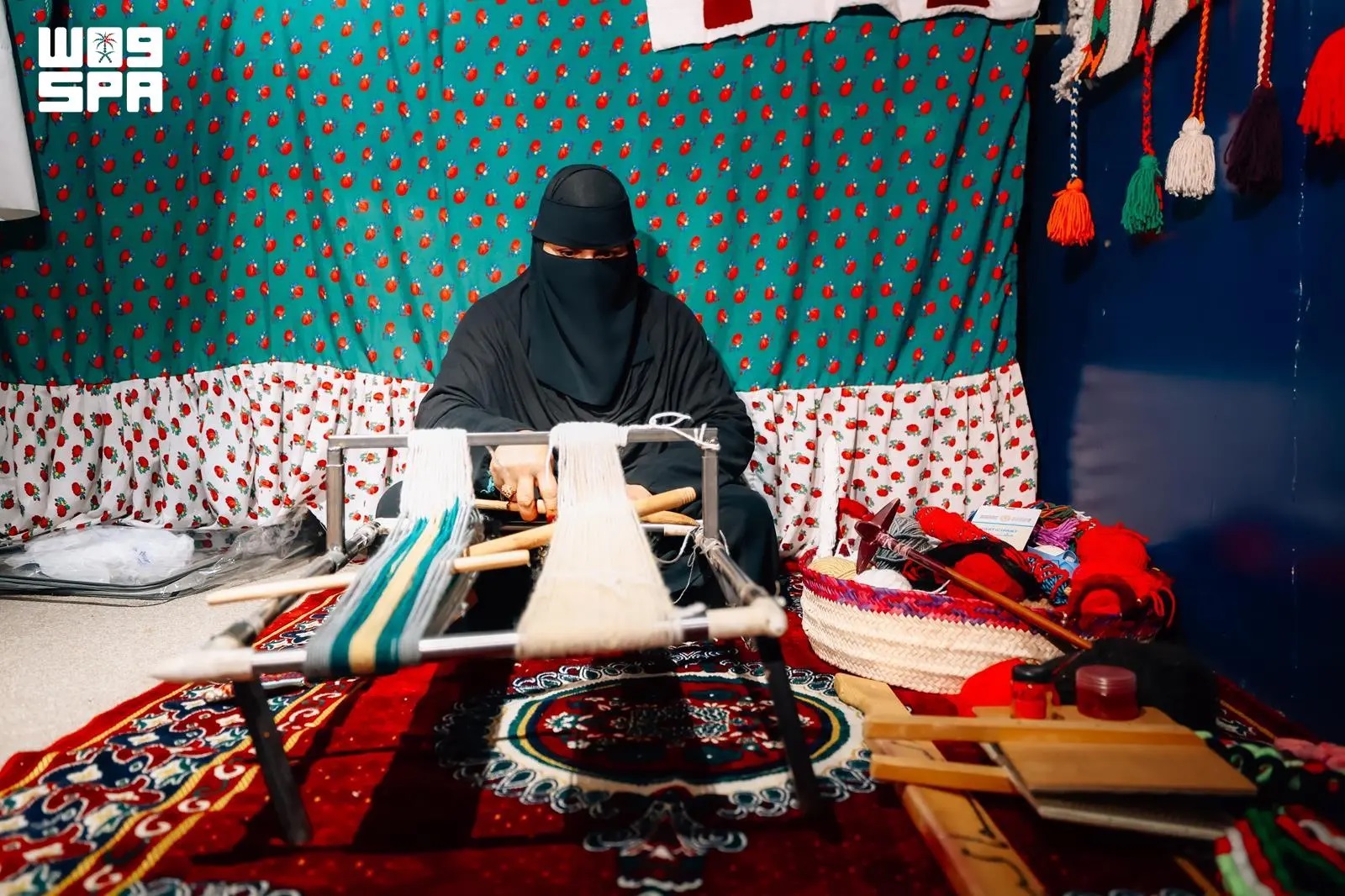
Wool spinning is among the oldest traditional crafts in desert and rural communities, where sheep’s wool, goat hair, and camel hair are transformed into yarn for clothing, bedding, tents, and other heritage products.
The process begins with shearing and cleaning the wool, followed by drying, fluffing, and spinning the fibers into strong yarn ready for weaving and handicrafts. In the past, women used natural dyes such as turmeric, henna, saffron, and dried black lime to create a variety of colors for traditional textiles.
Historically, wool spinning played a vital role in the household economy and was passed down through generations, preserving cultural identity and traditional craftsmanship. Today, efforts continue to revive and safeguard this heritage craft as a symbol of the authenticity and richness of the past.