KACST Successfully Develops and Manufactures Reverse Osmosis Membranes to Enhance Water Security and Boost Local Content
A research team at King Abdulaziz City for Science and Technology (KACST) has developed high-quality, locally manufactured reverse osmosis membranes for water desalination in Saudi Arabia, with the aim of enhancing water security and increasing local content in vital industries, in line with the environmental sustainability goals of Saudi Vision 2030.
According to a press release issued by the KACST today, this achievement is part of the efforts of the National Laboratory at KACST to localize vital water-related technologies, accelerate technological development, and develop innovative, high-efficiency solutions for seawater desalination and water treatment.
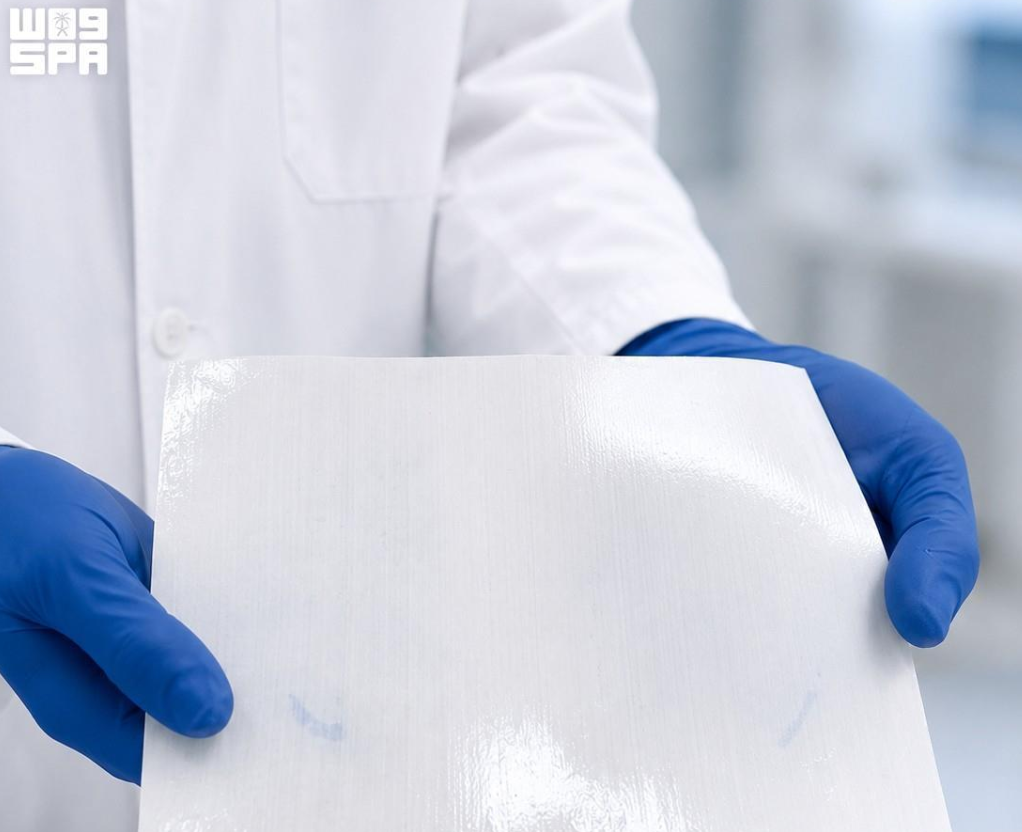
The research team carried out a series of laboratory experiments during the project to develop multilayer membranes and improve their properties, including the fabrication of more than 70 multilayer membranes and testing their efficiency in separating salts and contaminants, as well as improving water flux. The developed membrane achieved a salt rejection rate of 96%, with a water flux rate of 1.6 liters per square meter per hour under laboratory conditions. The developed membrane formulation was also documented as a trade secret.
The release added that reverse osmosis technology is one of the most efficient and widely used desalination technologies. It relies on semi-permeable membranes that allow water to pass through while preventing salts, impurities, and contaminants under high pressure. It is widely used in seawater desalination plants, drinking water production, and water reuse.
The project represents a strategic step toward reducing dependence on imports and building national capabilities in membrane fabrication and technology transfer, as well as supporting local supply chains and developing national expertise in engineering and technical fields related to the water sector.
During the next phase, the research team aims to raise the technology readiness level by simulating operational environments and industrial production lines, paving the way for full industrial localization of the technology within the Kingdom and enhancing investment opportunities and future industrial partnerships. This is expected to contribute to reducing the cost of desalinated water production and reinforcing Saudi Arabia’s position as a global hub for the development of desalination technologies and sustainable water resources.