Which UNESCO Site in Najran Ranks Among the World’s Largest Open-Air Museums?
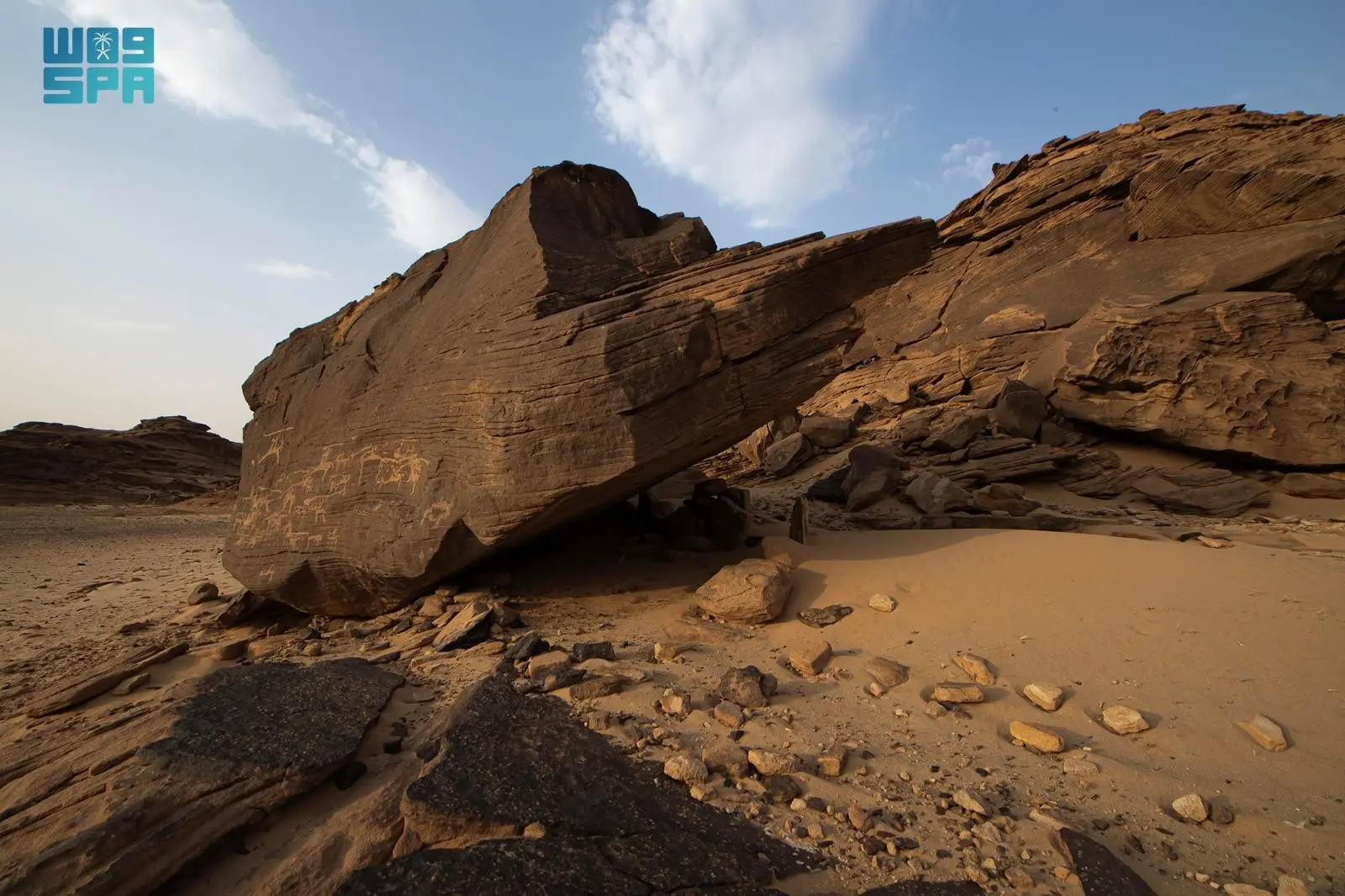
The Hima Cultural Area in Najran, a UNESCO World Heritage Site and one of the world’s most significant open-air museums, spans 557 square kilometers and documents millennia of human civilization through tens of thousands of rock carvings, including 550 panels depicting ancient lifestyles, hunting scenes, and a variety of flora and fauna.
Strategically positioned at a pivotal junction of ancient caravan and trade routes, Hima likely served as a major marketplace for travelers crossing the Arabian Peninsula. The site is a linguistic treasure trove, containing inscriptions in a diverse array of ancient scripts, including Thamudic, Nabataean, South Arabian, Aramaic, Syriac, and Greek. Notably, it also preserves early pre-Islamic Arabic inscriptions that trace the evolution of the modern Arabic script.
Today, Hima is not only an invaluable resource for scientific research and archaeologists but also a premier destination for tourists eager to explore the rich historical heritage and archaeological wonders of Najran Region.