How Many Stages Does the Production of the Holy Kaaba's Kiswa Go Through?
The production of the Holy Kaaba’s Kiswa (cover) goes through seven meticulous stages before its official installation on the first of Muharram, beginning with water desalination to prepare the water used for washing and dyeing the silk.
This is followed by the washing and dyeing stage, which removes the wax coating from the silk and dyes it black for the exterior Kiswa and green for the inner Kiswa and the Prophet’s Chamber.
Next comes the automated weaving stage, during which silk threads are transformed into warp spools containing more than 9,900 threads per meter. The process then moves to printing, where Quranic verses and Islamic motifs are applied onto plain silk fabric with geometric precision using a silkscreen technique.
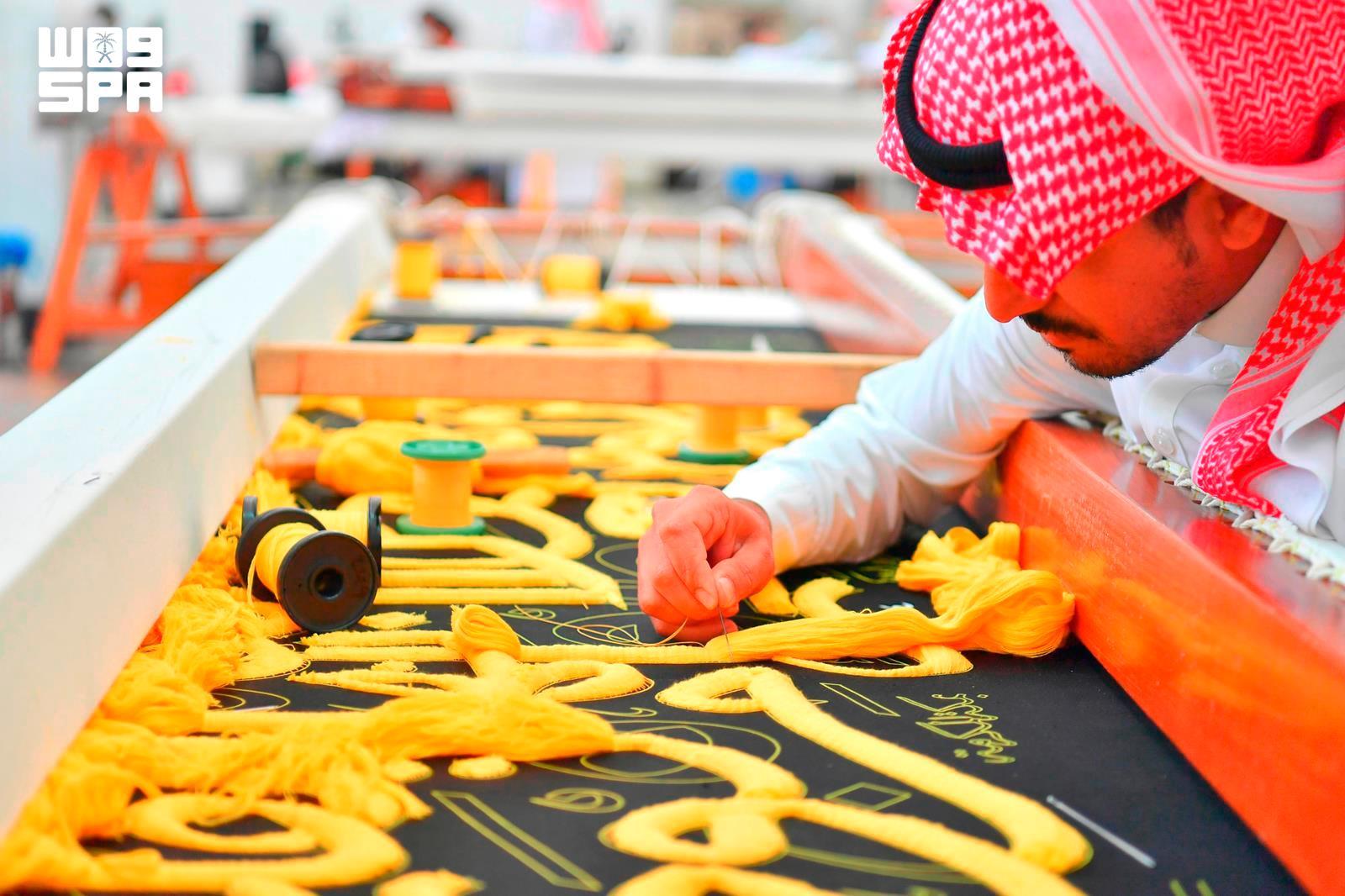
Subsequent stages include assembly and sewing, which join the panels of the Kiswa and attach the gilded pieces. This is followed by embroidery of these gilded sections using pure silver and gold-plated silver threads. The verses and motifs are padded with cotton threads, giving the lettering a raised, three-dimensional appearance.
The manufacturing process concludes with rigorous quality control to ensure all components meet strict specifications. According to the King Abdulaziz Complex for Holy Kaaba Kiswa, producing a single covering requires approximately 825 kilograms of raw silk, 120 kilograms of gold-plated silver wire, 60 kilograms of pure silver, and 410 kilograms of raw cotton.