AlUla’s Lion Tombs Reflect Historical Continuity from the First Millennium BCE
The Lion Tombs in Dadan are among the most prominent archaeological landmarks in AlUla, dating back to the first half of the first millennium BCE and representing a significant cultural symbol in the northwest of the Arabian Peninsula.
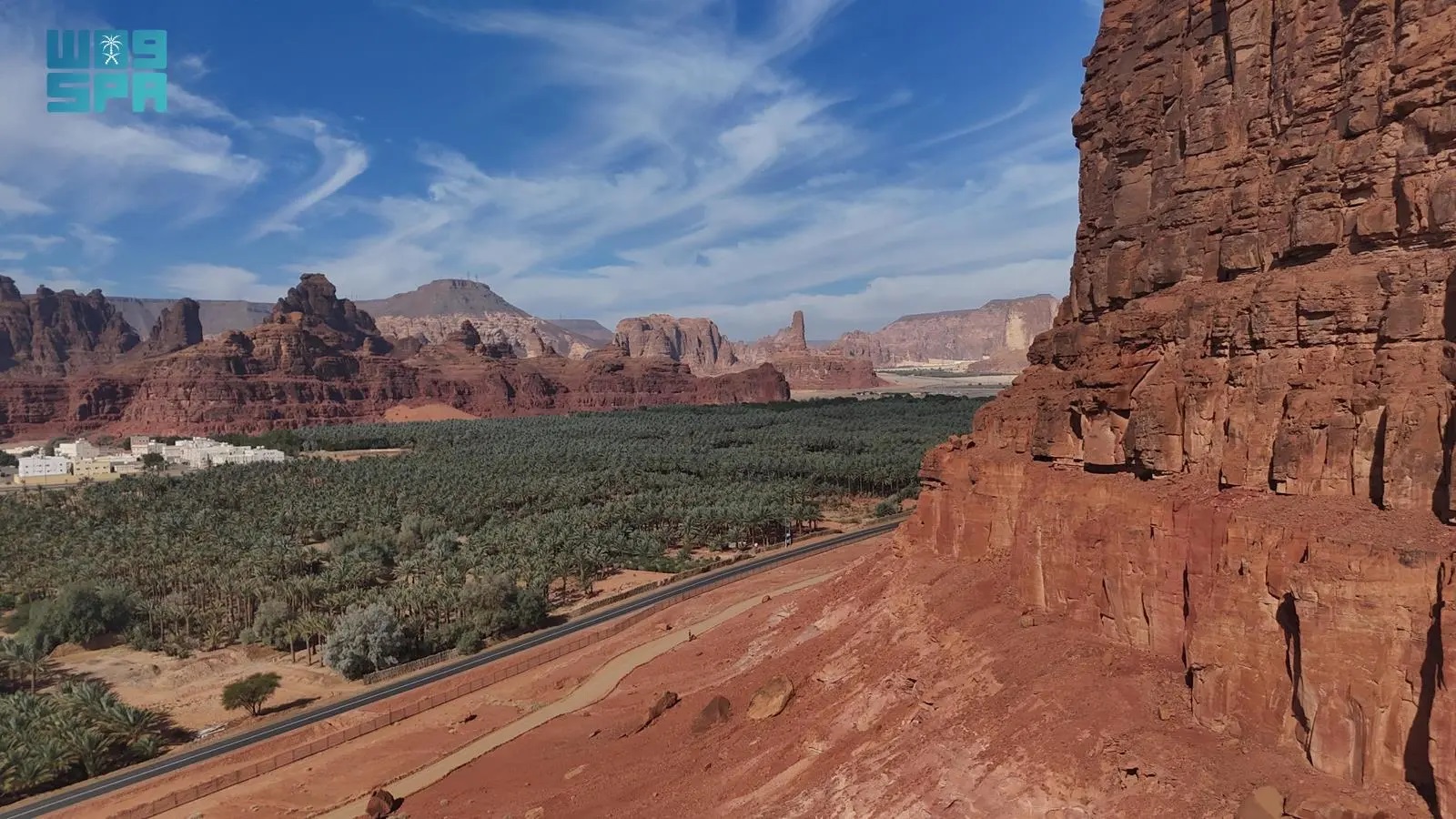
The tombs are located at the foot of Mount Dadan, which contains numerous rock-cut tombs of varying designs and sizes. Some are collective tombs consisting of rock chambers that include several graves, while others are individual tombs carved into the mountain façade as square niches exceeding two meters in depth.
One of these tombs is distinguished by four carved lions adorning its façade, with two lions flanking each grave, giving rise to the name “Lion Tombs.” The lions are carved within recessed rectangular panels and are depicted facing forward, standing upright on their forelegs, in an artistic style characterized by flattening and geometric stylization, with facial features and manes emphasized through regular horizontal lines.
The lion is considered one of the most prominent animal symbols in ancient Near Eastern civilizations, commonly associated with protection, prestige, and strength.
The Lion Tombs embody an important aspect of AlUla’s cultural heritage and highlight the site’s historical significance as a testament to the development of art, architecture, and funerary beliefs in the region across successive eras.