Heritage Utensils in Najran Highlight Cultural Identity and Revive Old Ramadan Traditions
Traditional utensils in Najran Region stand out during Ramadan, their unique significance reflecting the joy of the people and the revival of old Ramadan traditions. They are used to prepare popular traditional dishes and welcome guests during the holy month, telling stories from the past and strengthening family and social bonds.
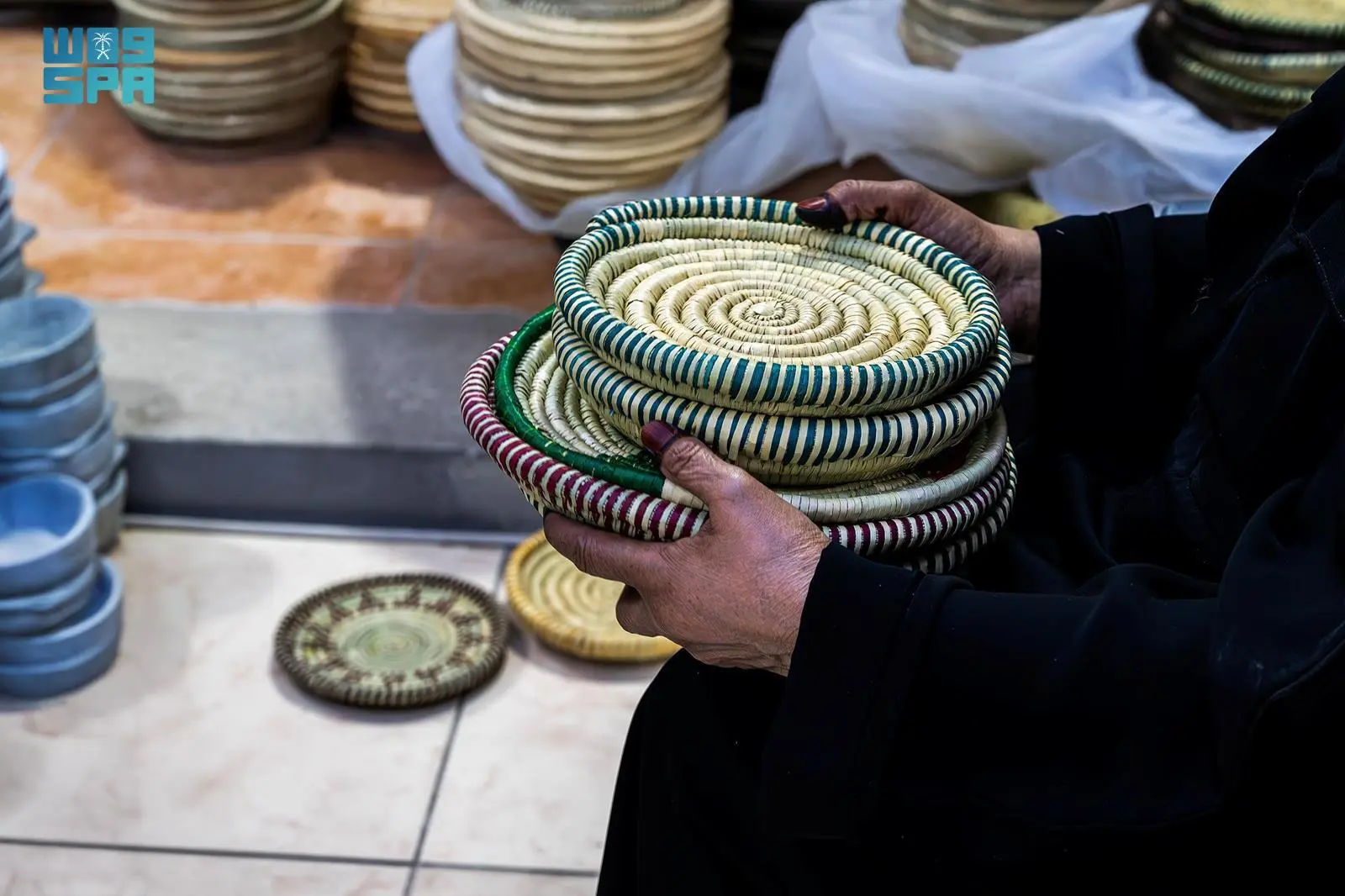
These days, the heritage markets in Najran are witnessing increased demand from residents and visitors for traditional and antique products. Among the most prominent are the stone “Madhan” vessels, distinguished by their fine carving and hollowed design, and available in various sizes. They are wrapped in palm-woven crafts called “Al-Khous,” which are then covered with colored leather in bright shades of red, white, and black. Their sizes range from small, suitable for preparing a light meal, to larger sizes used for serving a full meal.
The Madhan vessel is considered the most popular among traditional utensils during the month of Ramadan, as it is used in preparing the dish “Raqsh,” which is a distinctive to the Najrani iftar table in this holy month.
Alongside it are palm-woven and leather crafts, particularly the handmade “Al-Matarah” utensils crafted from palm fronds and decorated with brightly colored leather in elegant shades. These are used to serve wheat and corn bread, as well as the Raqsh Madhan, on the dining table.
Najran is regarded as one of the Kingdom’s most prominent cultural and historical centers, distinguished by its rich heritage and diverse traditions that reflect the region's history and identity.
It plays a vital role in strengthening national belonging while also enhancing tourism appeal, thereby supporting the local economy and helping preserve heritage for future generations.