Saudi Arabia’s Defense Field Tests Strengthen Confidence in Local Military Industries
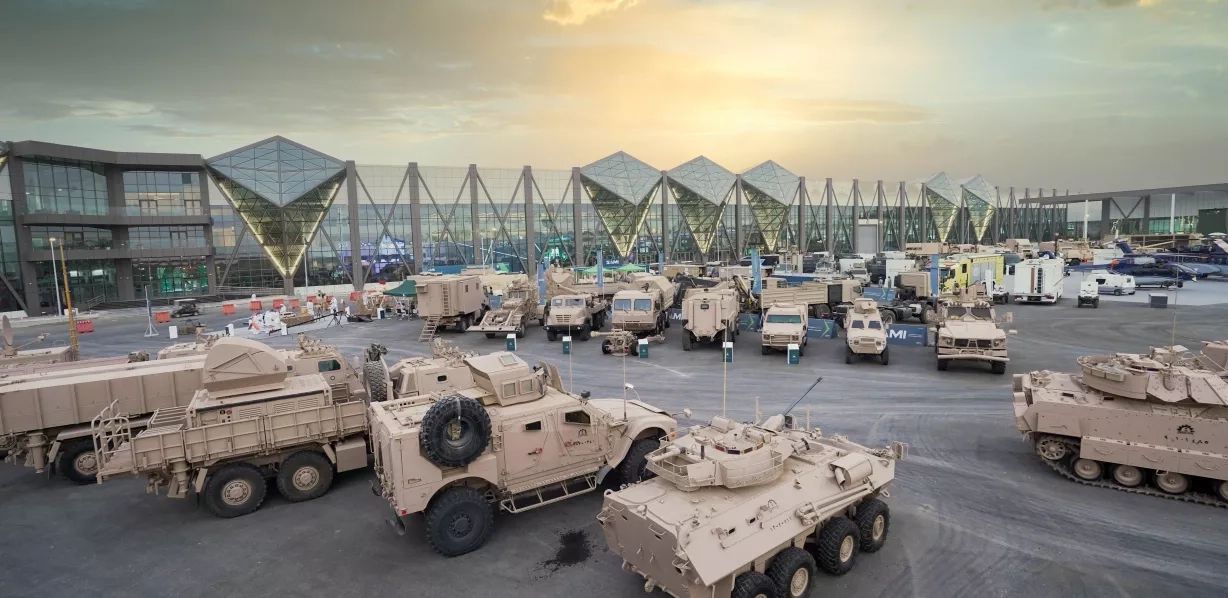
Amid escalating regional geopolitical tensions, the Saudi military-industrial model has emerged as a catalyst for field-testing the localization of defense systems. The Ministry of Defense has demonstrated remarkable success in intercepting and neutralizing recent hostile Iranian attacks.
This comes at a time when the Kingdom seeks to increase the localization of military spending to 50% as part of Vision 2030, transitioning the sector from import dependency to building an integrated defense industrial base. Data indicates a surge in localization rates from approximately 2% in 2017 to 24.89% by the end of 2024, reflecting an accelerated pace toward achieving Vision 2030’s targets.
This performance is viewed not only as a military achievement but also as a factor bolstering market confidence in local defense products. It provides companies operating in the Kingdom with a competitive advantage rooted in being "combat-proven." Consequently, sectors of the business community are increasingly incentivized to invest in military industries, aiming to produce highly competitive products tailored for real-world operational environments, moving beyond traditional partnerships.
Why does Saudi Arabia attract investors?
The allure of the Saudi defense market is no longer tied solely to the volume of military spending. Instead, it is driven by the construction of a comprehensive economic and technological ecosystem that encompasses manufacturing, supply chains, venture capital, and accelerated localization programs.
Estimates from the General Authority for Military Industries (GAMI) suggest that supply chain opportunities could capture approximately 80% of future spending in the sector. This includes precision industries, advanced electronic circuits, and semiconductor technologies used in radars and modern defense systems.
Furthermore, Maintenance, Repair, and Overhaul (MRO) services stand out as highly sustainable activities. Given that military platforms rely on long-term operation and upgrade contracts, they provide stable business flows for sector companies.
Parallel to this, the sector is witnessing an expansion in startup investments. The launch of the $100 million "Masna Venture" fund marks the first venture capital fund specialized in the Kingdom’s defense sector, targeting companies in drones, artificial intelligence (AI), and smart defense systems.
Investors believe that the shifts in modern warfare—particularly the rise of low-cost drones and digital systems—have opened doors for dual-use technologies such as AI, cybersecurity, and UAVs. These sectors benefit from simultaneous demand in both civilian and military markets.
Economic indicators reinforce this trend: the defense AI market in Saudi Arabia is expected to reach approximately $1 billion by 2030, while the cybersecurity market is projected to hit $11 billion in the coming years.
Local models reflecting this growth include "United Defense," a company specializing in drones. Their data shows annual revenues between 200 and 250 million SAR, with a net profit margin of nearly 30% and an ROI ranging between 35% and 40%, highlighting the profitability of defense tech activities.
Saudi Arabia and Attracting Tech Talent
Ahmed Fawzi, an investor in the drone sector, explained that recent field experiences and the subsequent superiority in neutralizing threats have enhanced the international reliability of Saudi military industries, as these products have undergone "real-world operational testing."
He added that the Kingdom has become a magnet for talent in this sector, not only due to investment opportunities but also through support for Intellectual Property (IP) protection and development opportunities facilitated by direct engagement with the latest global technologies.
Fawzi emphasized that achieving field superiority for Arab nations is directly linked to investing in R&D and applied testing of small aircraft technologies. He concluded that "whoever possesses this technology holds the initiative in modern warfare, which is now increasingly driven by drone systems."