Global energy prices soar as Iran disrupts shipping, oil and gas production
Global oil and gas prices jumped on Tuesday as the U.S.-Israeli war on Iran halted energy exports from the Middle East, with Tehran attacking ships and energy facilities, closing navigation in the Gulf and forcing production stoppages from Qatar to Iraq.
The benchmark Brent crude oil contract gained nearly 8% on Tuesday to above $83 per barrel, the highest since July 2024, taking gains since Friday to more than 15%. European gas prices soared as much as 40% before paring gains, adding to a 40% surge on Monday. Sugar, fertiliser and soy prices have all risen too.
The conflict risks triggering a renewed spike in inflation that could choke off economic recovery in Europe and Asia, in a region that accounts for almost a third of global oil production and a fifth of natural gas.
Iraq, OPEC's second-largest producer, on Tuesday said it may be forced to cut production by more than three million barrels per day in a few days if oil tankers cannot move freely to loading points.
As of Tuesday, Iraq has decreased production from the Rumaila oil field by 700,000 bpd and cut 460,000 bpd from the West Qurna 2 field.
Traffic through the Strait of Hormuz was closed for a fourth day after Iran attacked five ships, choking off a key artery accounting for about 20% of global oil and LNG supply.
Crude tanker transits through the strait fell to four vessels on March 1, the day after hostilities broke out, versus an average of 24 per day since January, according to Vortexa vessel-tracking data. Three of the four were Iran-flagged.
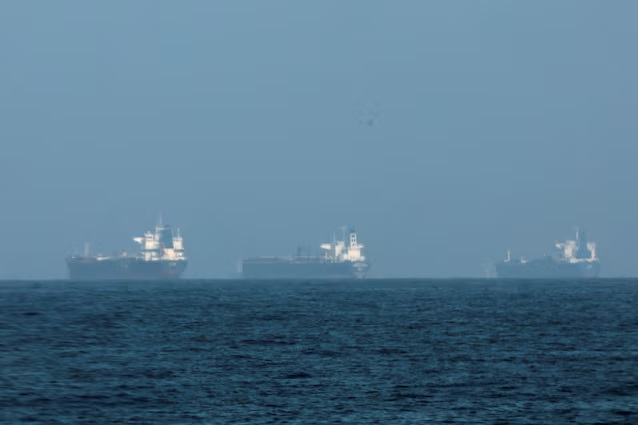
Hundreds of tankers loaded with oil and LNG are stranded near big hubs, such as the United Arab Emirates' port of Fujairah, unable to reach customers in Asia, Europe and elsewhere, as some companies are trying to find alternative routes.
On Tuesday, a fuel tank at Oman’s Duqm commercial port was hit by a drone and a fire broke out at the UAE's Fujairah, one of the key regional oil hubs, slowing ship refuelling and potentially shifting demand to other ports including Singapore.
On Monday, Qatar shut down its liquefied natural gas facilities, some of the world's biggest, which supply around 20% of global LNG exports, Saudi Arabia suspended production at its largest domestic refinery, while Israel and Iraq's Kurdistan also shut chunks of their gas and oil output.
Elsewhere in the world, Chinese refiners have started to shut units in response to the conflict's impact on crude supply, while India, one of the most dependent countries on oil and gas from the Middle East, has said it has started to ration gas supplies to industries after Qatar production was shut down.