Islamic Ministers' Executive Council Stresses Unity, Enhanced Joint Action
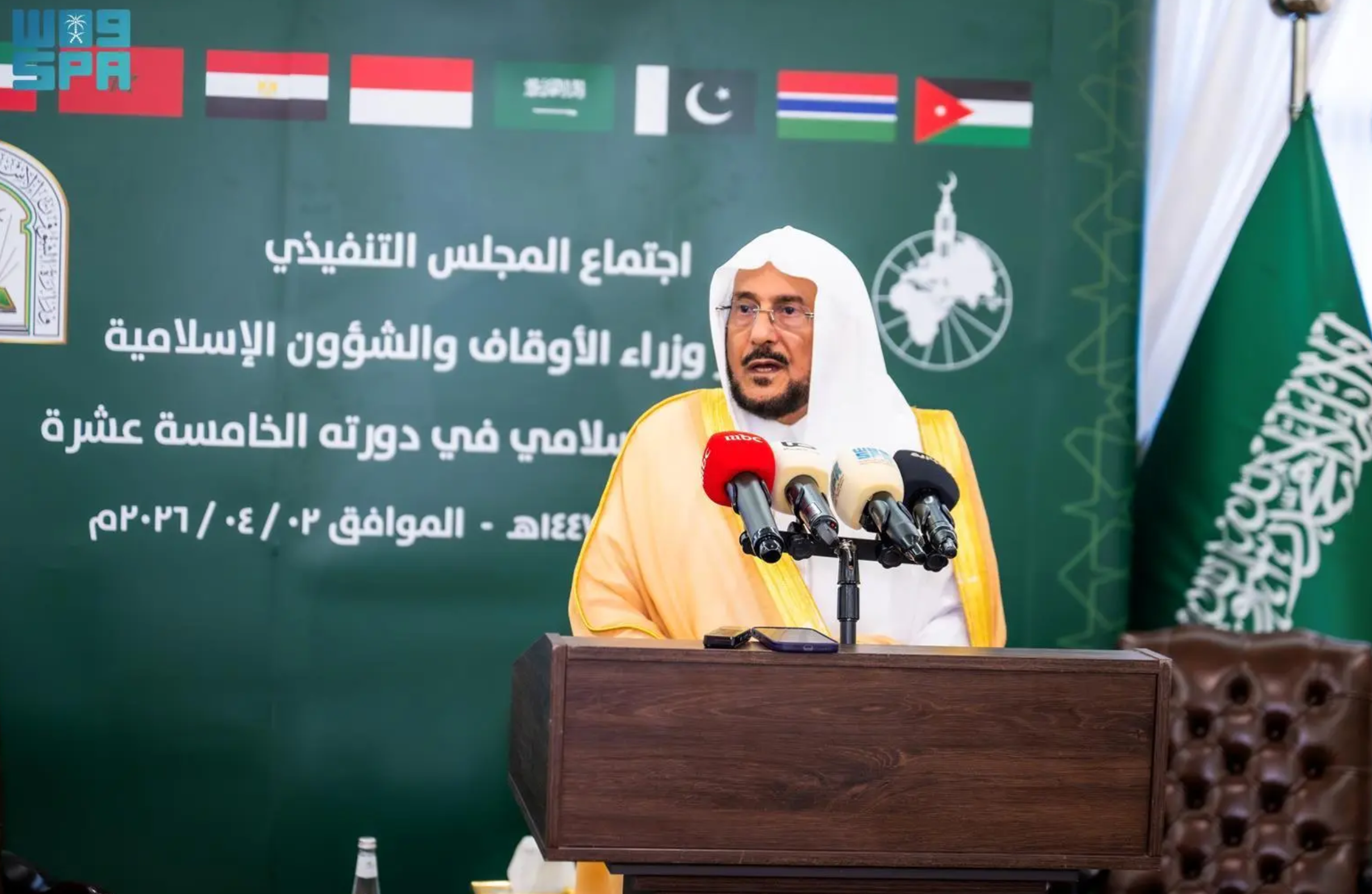
Chaired by Minister of Islamic Affairs, Dawah and Guidance Sheikh Dr. Abdullatif Al Alsheikh, the Executive Council of the Conference of Ministers of Awqaf and Islamic Affairs in the States of the Islamic World held its 15th meeting via videoconference from Jeddah on Thursday.
The meeting brought together ministers from council member states, including Saudi Arabia, Jordan, Indonesia, Pakistan, The Gambia, Kuwait, Egypt, and Morocco.
In his opening address, Dr. Al Alsheikh underscored the critical importance of Islamic unity and the collective voice of Muslims.
He highlighted the deliberate heinous attacks carried out by Iran and its militias in the region, targeting Saudi Arabia, other Gulf Cooperation Council (GCC) states, and Jordan, stating that these actions necessitate denouncement and condemnation for violating Islamic principles and international charters and undermining regional peace and security.
Dr. Al Alsheikh affirmed that Saudi Arabia, thanks to Allah and the wise leadership, is capable of safeguarding its security and defending its sacred sites. He emphasized the unity of the Saudi people behind their leadership and lauded the leadership's role in serving Islam and Muslims, promoting stability, and countering attempts to incite discord.
The council’s meeting was held within the framework of enhancing cooperation and coordination in the fields of Islamic affairs and awqaf with the aim of serving the legitimate interests of Muslims, Dr. Al Alsheikh said. He highlighted the selection of topics focused on reinforcing a correct Islamic identity, promoting moderation, and linking Islamic principles with Muslims' behavior.
During the meeting, Minister of Religious Affairs of the Republic of Indonesia Professor Nasaruddin Umar underlined the concept of "ecotheology" as a framework combining religious values with ethical responsibility in addressing environmental challenges. He stressed that protecting the Earth is both a religious and humanitarian duty that requires directing human behavior toward conserving the environment and protecting its resources.
Meanwhile, Minister of Habous and Islamic Affairs of the Kingdom of Morocco Ahmed Toufiq highlighted in his presentation the significance of the “Tasdid Al-Tabligh” initiative as a reformative approach bridging the gap between noble religious values and individual practice.
He noted that religious affairs management relies on institutional cooperation between scholars and the ministry, grounded in solid religious principles. This aims to promote moderation, reinforce ethical values, and leverage modern means to spread the message of Islam and serve societal causes.
Other council members addressed various topics in Islamic affairs and awqaf, discussing ways to strengthen cooperation and coordination among member states to serve the interests of the Muslim Ummah.