Saudi Diving Industry: From Maritime Heritage to Thriving Pillar of the Blue Economy
Stretching across thousands of kilometers along the Red Sea and the Arabian Gulf, Saudi Arabia's coastlines are driving a rapidly expanding diving and marine tourism sector. Rooted in historical pearl-diving traditions in the Farasan Islands and Gulf ports, diving has become a structured, high-value investment sector that aligns with Saudi Vision 2030 and strengthens the national blue economy.
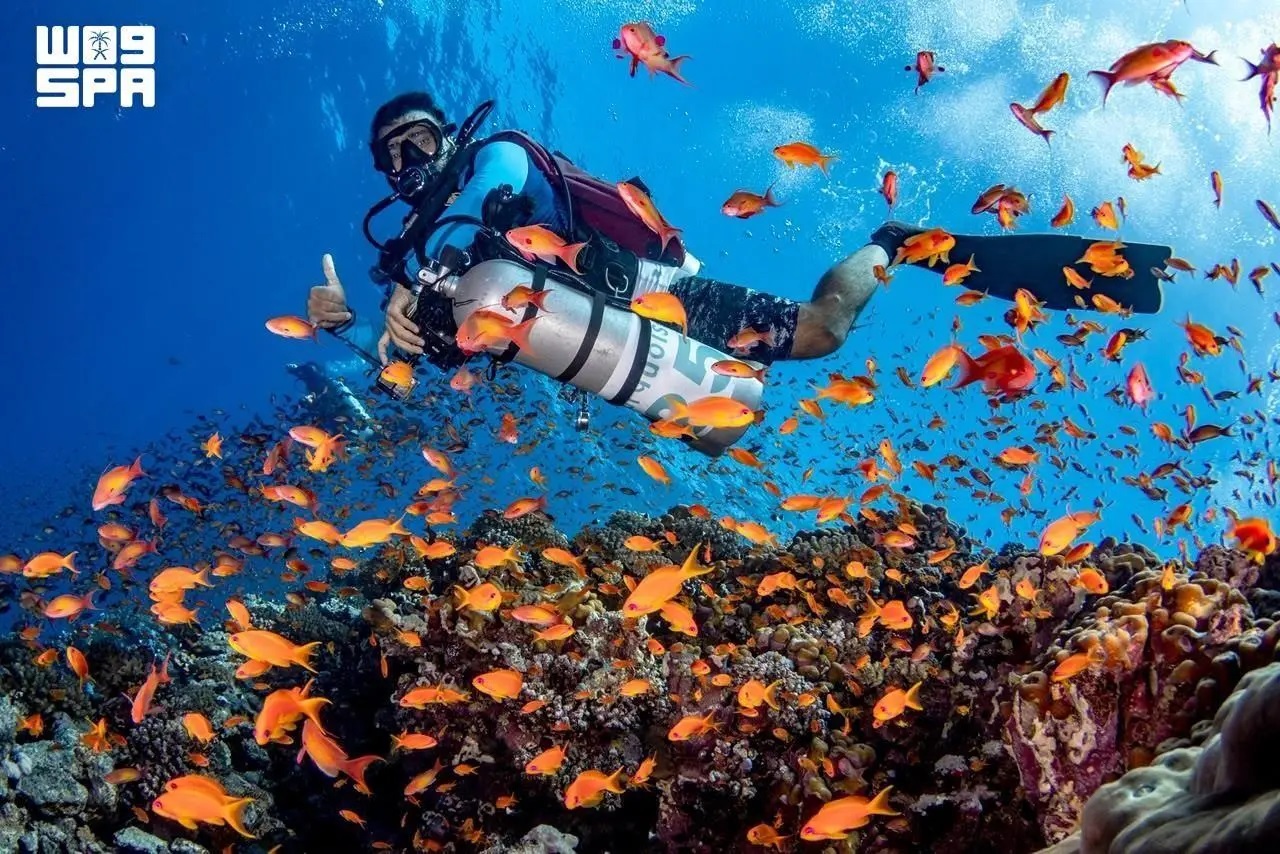
The Kingdom's waters offer an exceptional competitive edge in marine biodiversity. National Center for Wildlife studies have recorded more than 1,200 fish species, over 300 coral species, and generated the world's largest Red Sea biodiversity database containing over 12.8 billion genetic sequences. While the Red Sea's coral walls, pristine islands, and deep drop-offs in sites like Yanbu, Umluj, Bayadah, and the Farasan Islands attract advanced divers and photographers, the calmer waters and historic shipwrecks of the Arabian Gulf off Jubail and Jana Island offer premier locations for wreck exploration, night diving, and beginner training.
Generational heritage anchors the sector's human story. For 89-year-old Ali, a veteran of 60 years at sea, maritime life continues through his four sons, who inherited the family boats to work as dive instructors and marine guides for scientific expeditions, while he sells fresh catches from his stall. Similarly, 68-year-old Abdullah Hussein recalls four decades shaped by the rigors of pearl diving in search of rare finds, a legacy now showcased to modern audiences through cultural events.
Modern enthusiasts reflect the sport's professional evolution. Engineer Abdullah Al-Dosari, who took up diving in 2017, progressed through rigorous Professional Association of Diving Instructors (PADI) certifications to earn an Advanced Open Water Diver license. His training covered essential safety protocols, decompression calculations, and buoyancy control to protect coral ecosystems, leading him to explore sites from Half Moon Beach and Jeddah to Jana Island off Jubail for daytime turtle encounters and night dives.
Crucial to this growth is an advanced regulatory and operational ecosystem led by the Saudi Water Sports and Diving Federation (SWSDF). Established in 2018, the federation has standardized professional licensing, surveyed more than 1,000 dive sites across 400 open-water destinations, and accredited 68 shore-diving locations.
Through "Zawil," an electronic portal for issuing diving permits developed by SWSDF, the General Directorate of Border Guard, and Elm Company, the Kingdom regulates 93 accredited diving centers and supports over 50,000 licensed divers, with certified professionals guiding activities under strict safety and marine conservation standards.
Industry professionals emphasize that rigorous standards underpin the sector's commercial expansion. Diving instructor Ahmed Ali noted that round-the-clock centers across coastal regions provide access to premier destinations like Jazan, Al-Lith, and Bayadah. Official licensing from international bodies like PADI, Scuba Schools International (SSI), and National Association of Underwater Instructors (NAUI), along with national accreditation from SWSDF, remains crucial to upholding safety, protecting marine habitats, and building tourist confidence.
This regulatory framework has enabled practitioners like licensed instructor Abdulaziz Al-Wabil to transition from recreational diving to business enterprise. Training youth from age 10 and leading week-long liveaboard "safari" trips, Al-Wabil guides visitors through wreck diving and marine exploration, turning deep-sea adventures into a sustainable tourism product.
Beyond leisure, diving in the Kingdom has become a catalyst for scientific discovery and high-yield economic returns. Divers actively participate in coral cultivation initiatives, ecological surveys, and environmental monitoring alongside academic institutions. Combined with giga-projects like The Red Sea and NEOM, and the expansion of cruise tourism, the sector is creating specialized career opportunities in marine guiding, technical diving, and underwater photography—solidifying the Kingdom's position as a premier global hub for sustainable marine tourism.